
The Journal
Wildlife Photography Tips for Beginners
9 October 2026 · 5 min read
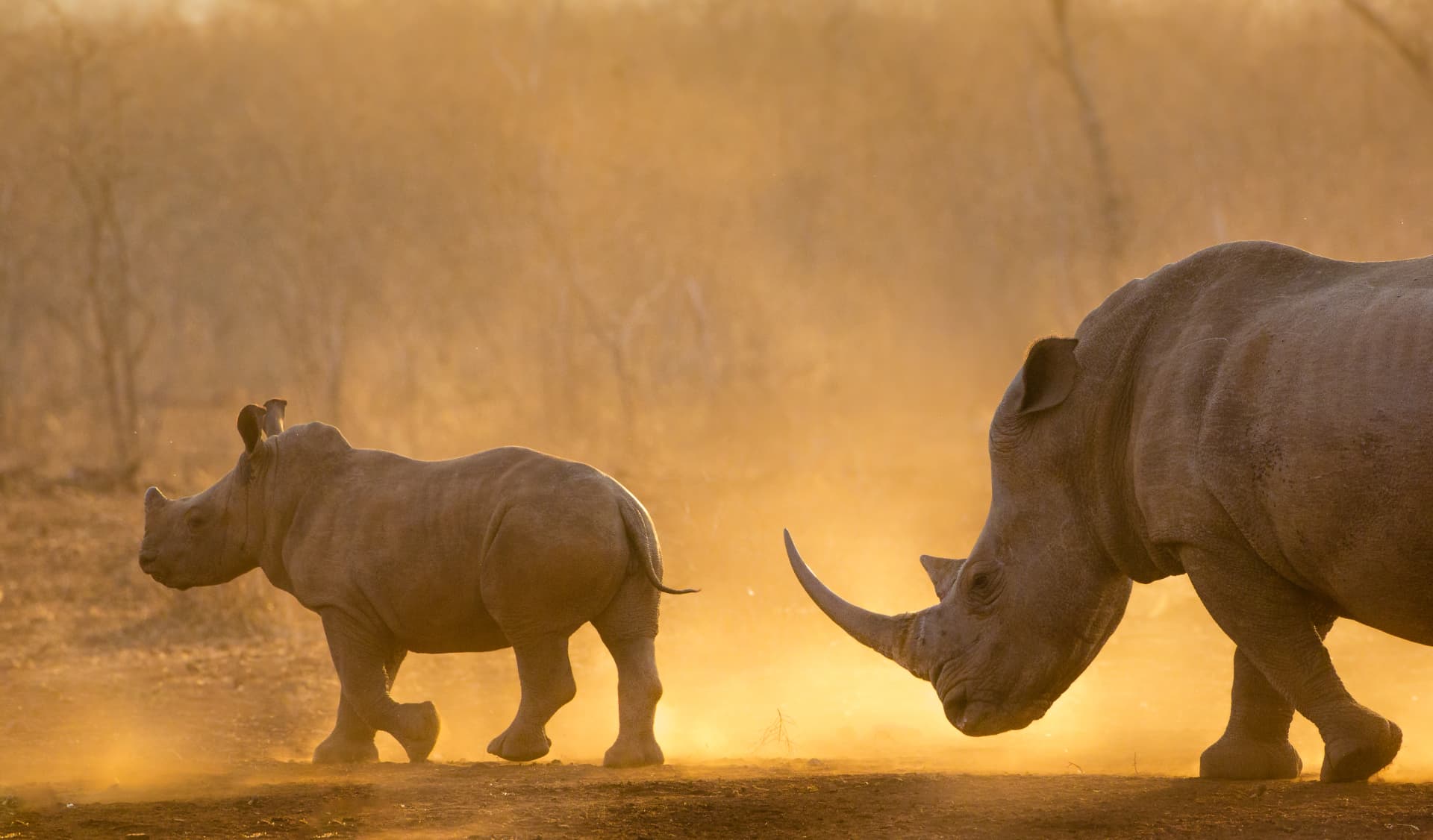
You do not need an expensive camera to take photographs worth keeping. Most of what makes a wildlife photograph good has nothing to do with the equipment. It is the light, the angle, the distance and the patience, and all four are free. These tips work on safari, in a national park, or in the bush behind your own house.
Work with the light
Animals are most active early in the morning and in the last hour of daylight, which is also when the light is softest and warmest. Midday sun flattens everything and drops hard shadows across a face. If you can only shoot in the middle of the day, look for open shade, or turn so the sun comes in from the side instead of straight down.
Get down to their level
Most beginner photographs are taken standing up, looking down at the animal. It works, but it leaves the viewer outside the moment. Crouch, sit, or lie down until the lens is level with the animal's eye. The photograph suddenly feels like you were there, and the background usually softens too.
Freeze the movement
Animals do not hold still, and a slow shutter turns an otherwise sharp frame into a soft one. On a camera, a fast shutter speed is the simple answer: around 1/500 of a second for an animal on the move, and faster for a bird in flight. On a phone, hold very still, brace your arms against something solid, and take several frames rather than one. One of them will be sharp.
Watch what is behind the subject
A sharp animal in front of a tangled background loses the eye. Before you press the shutter, look at what sits behind the subject. Two or three steps to one side can put a plain wall of grass, water or sky behind it, and the photograph starts to look deliberate. It costs nothing and it is the fastest improvement most people can make.
Get closer, but never chase
Move closer with your feet where it is safe and with a zoom where it is not. If an animal walks off because you stepped in, you were too close. Keep its escape route open, never block a waterhole or a nest, and let the animal decide how near you may be. A calm animal gives better photographs than a frightened one, every time.
Be patient and stay still
The best frames usually arrive after the tenth minute of doing nothing. Sit quietly by a waterhole or a track and let the place settle again. Birds return, animals cross, and you get the moments that people walking past never see.
Take far more photographs than you think you need, then be hard on yourself later. A hundred frames that yield three good ones is a normal day. Carry more memory cards than you think you need and do not delete anything as you go.
Once you have those three, the next question is where they live. Send us the photographs you love, and we curate, sequence and design a leather bound album around them, so your best frames end up somewhere you will actually look at them again.
Your safari should not end on your phone.